
The Billion-Euro Red Dot.
Is Leica About to Change Hands – And What Happens Next?
Leica, the quiet cult of Wetzlar, is suddenly at the center of a very loud story: its owners are reportedly exploring a sale of the company for around one billion euros. Behind the scenes, private equity, Chinese capital and European money are circling the red dot. For photographers, this is more than a finance headline – it could shape the future of M, L-Mount and the idea of what “Leica” even means.

A Billion-Euro Question: Who Owns Leica Tomorrow?
According to a Bloomberg report, Leica’s current owners are considering selling a controlling stake in the company in a deal that could value the brand at about €1 billion. Follow‑up coverage from PetaPixel, Digital Camera World and others puts the potential price tag in the €1–1.2 billion range.
The structure behind Leica today is relatively complex but clear: control sits with a group led by longtime patron Dr. Andreas Kaufmann (via ACM Projektentwicklung) and investment giant Blackstone, which has backed Leica for more than a decade. Bloomberg and other outlets report that both parties are now evaluating options to sell down or exit that holding.
Several potential buyers have been named in the financial press, including Chinese investment group Hony/HSG (linked to Sequoia China) and Nordic private‑equity firm Altor – a mix that underscores both Leica’s appeal in Asia and its value as a European luxury asset. None of the parties has confirmed a deal, and talks are described as early and exploratory, but the signal is clear: Leica is officially “in play”.
From Near-Obscurity to Luxury Powerhouse
To understand why Leica is attracting billion‑euro interest, it helps to remember where the company came from. In the early 2000s, Leica was struggling. The shift from analog to digital had hit hard; academic case studies describe the company as slow, fragmented and dangerously nostalgic in its product strategy.
Dr. Andreas Kaufmann’s investment and takeover marked a turning point. He replaced management, pushed Leica into digital with the M8 and later the S system, and began re‑framing the brand not as a mass‑market camera maker, but as a high‑end, low‑volume luxury manufacturer.
Blackstone’s arrival as a strategic investor then added acceleration and reach. The firm helped fuel a global network of Leica Stores and Galleries in premium locations, turning the brand into a visible, physical signal of photographic luxury. At the same time, Leica expanded aggressively into Asia – especially China – opening new outlets and leveraging the fast‑growing market of affluent enthusiasts and collectors.
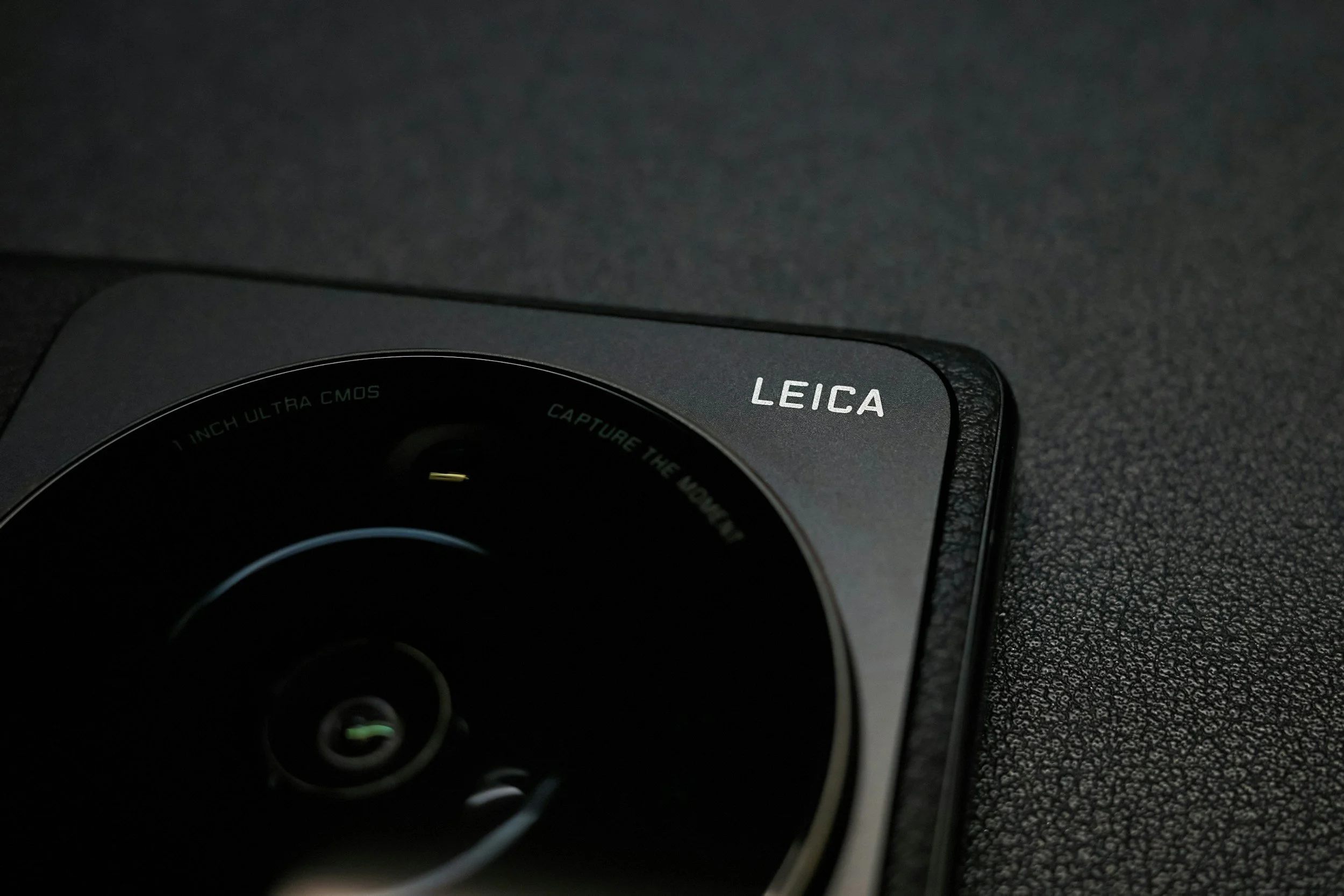
In parallel, Leica’s move into the smartphone world via imaging partnerships (most recently with Xiaomi) and other digital ventures broadened its role from camera maker to “image quality” brand. In recent years, Leica has reported record or near‑record sales and continued growth despite a shrinking traditional camera market – something industry analysis repeatedly highlights as proof that the luxury‑camera segment is not only alive but expanding.
Why Talk About Selling Now?
If Leica is thriving, why would its owners even consider selling?
From Blackstone’s perspective, the answer is simple: timing. Private‑equity investors typically look for an exit after a decade or less. Blackstone has been involved with Leica for well over that horizon, and specialist PE media have been reporting for some time that the firm is actively weighing a sale as interest in Leica’s luxury positioning builds.
A billion‑euro valuation also represents a logical crystallisation point. Bloomberg, Notebookcheck and others describe a process where advisors have been mandated to test the market and gauge how much strategic and financial players are willing to pay for the brand. For Kaufmann, who has publicly spoken about his ambition to turn Leica into a global company, this could be a moment to either partially cash out or bring in a new partner to finance the next phase of international growth.
At the same time, Leica’s core business is maturing. The market for high‑end cameras is not exploding; it is stabilising. To grow meaningfully from here, Leica likely needs deeper engagement in software, services, mobile imaging, and new geographic or vertical markets – all of which require capital and a willingness to move faster than the traditional camera industry normally does.
M-Mount, L-Mount, Smartphones: What’s Really at Stake
For working photographers and serious enthusiasts, the natural question is: does any of this change the cameras in our hands?
The M-System: Soul of the Brand
The mechanical M, with its rangefinder and M-mount lenses, is more than a product line; it is Leica’s myth. It embodies reportage, street, documentary – and a way of working that is diametrically opposed to spec‑sheet chasing. Industry commentary around the potential sale is nearly unanimous on one point: no sensible buyer will touch the essence of the M brand.
The M‑System anchors Leica’s desirability and collector value. Removing or diluting it would be like Patek Philippe dropping mechanical movements. Any acquirer paying a billion euros is paying for that cultural capital as much as for any factory in Wetzlar.
The L-Mount Alliance: The Strategic Growth Engine
Where the story becomes more dynamic is L‑Mount. Leica created the L‑Mount and later opened it up to Panasonic and Sigma, forming the L‑Mount Alliance – a shared standard for mirrorless cameras and lenses across full‑frame and APS‑C.
Official L‑Mount documentation stresses its role as a universal, cross‑brand bayonet designed to support a broad system across different manufacturers. For a new owner, this is a strategic lever:l-
The alliance can be deepened, bringing more partners into the ecosystem.
Licensing terms and co‑development projects can be used to spread R&D costs.
Leica can position itself as the “halo brand” within a larger L‑Mount universe, benefitting from the volume others create.
How aggressive or conservative that strategy becomes will depend heavily on the investor’s DNA: a European fund focused on long‑term brand stewardship will move differently from a tech‑centric Chinese investor hungry for rapid scale.
Mobile Imaging and Digital Services
Then there is the smartphone dimension. As detailed in Chinese business coverage, Leica’s name and know‑how are now embedded in phone cameras in key Asian markets via partnerships with Xiaomi and others. This is where a potential Chinese buyer in particular might see upside:
Deeper integration of Leica branding and color science into mobile devices.
Expansion into software, filters, and cloud‑based imaging services with Leica‑tuned looks.
A tighter loop between “entry” via smartphone and “graduation” to Leica‑branded cameras and lenses.
For traditional Leica users, this may feel distant, but financially it could become a major pillar – and influence how much attention and resource the company can invest back into “pure” cameras.
How the Leica Community Is Reacting
Within the Leica community, the rumors have triggered a mix of concern, curiosity and dark humor. In Leica forums and subreddits, users are already joking that “a Leica is now literally a billion‑euro camera”, while others worry about price hikes, cost‑cutting, or a drift away from “Made in Germany”.
Editorial pieces in photography magazines have taken a more balanced view: on the one hand, recognising the risk that a financially driven owner pushes too hard on margin and volume; on the other, noting that Leica has already become a global luxury brand with Asian flagship stores and smartphone tie‑ins – and that this evolution predates any sale.
What unites almost all perspectives is the sense that Leica sits at a delicate intersection: part camera maker, part luxury icon, part imaging technology partner. A change of ownership will inevitably shift the weight between these roles.
Personal Take: What This Could Really Mean for Photographers
Stepping back from the financial headlines, a reasonable personal assumption is this:
The M-System will likely become even more of a halo product. A new owner has every incentive to double down on the M as a symbol – expect more special editions, tighter control of volumes, and continued emphasis on craftsmanship and heritage. That could reinforce the M’s cult status, but also push it further out of reach for many photographers.
L‑Mount could be turbo‑charged. If a buyer with strong tech or consumer‑electronics ties takes over, the L‑Mount Alliance is the most obvious platform to scale. More bodies, more cross‑brand lenses, possibly more aggressive pricing from partners – and Leica positioned as the ultra‑premium tip of that ecosystem.
Software and smartphones will gain influence over Leica’s design choices. As mobile imaging and computational photography expand, Leica will face pressure to integrate those expectations into its cameras – in image processing, autofocus, connectivity, even UI. A new owner focused on growth is unlikely to leave that potential untapped.
For Rangefinder shooters and purists, the next 5–10 years may feel paradoxical. On one hand, the myth of Leica will be more visible and more heavily marketed than ever. On the other, the center of gravity – in business terms – will probably move further towards global luxury and imaging platforms, not the quiet streets of Wetzlar and Berlin.
In short: if the sale happens, the red dot will almost certainly shine brighter in the global market. The open question is whether that brighter glow still feels like the same Leica light when you raise an M to your eye on a cold street corner at night.
-
PetaPixel – “Leica Camera Considering Selling a Majority Stake for $1.2 Billion: Report” (Jan 25, 2026)[petapixel]
Notebookcheck – Coverage of Bloomberg report on possible €1 billion Leica sale (Jan 25, 2026)[notebookcheck]
Leica Rumors – “Report: Blackstone could sell control of Leica Camera in €1 billion deal” (Jan 22, 2026)[leicarumors]
36Kr – “Will a Chinese Company Acquire the Century-Old Brand?” (Jan 25, 2026)[eu.36kr]
PE‑Insights – “Blackstone-backed Leica weighs €1bn sale as interest builds” (Dec 31, 2025)[pe-insights]
Bloomberg – “Blackstone-Backed Leica Camera Weighs €1 Billion Sale” (Jan 23, 2026)[bloomberg]
Digital Camera World – “US$1.2 billion Leica sale: Is Andreas Kaufmann preparing to exit?” (Jan 25, 2026)[digitalcameraworld]
The Magazine for Photographers – “Leica Facing A Change Of Ownership?” (Jan 26, 2026)[themagazineforphotographers]
SDA Bocconi Insight – “Leica’s long journey from analog to digital” (Nov 20, 2022)[sdabocconi]
TU Wien – “Leica Kamera: der mühselige Weg zur Digitalisierung” (Jan 10, 2024)[tuwien]
L‑Mount Alliance – Official site & Q&A on the L‑Mount standardl-mount+1
Leica Camera AG – Press material on international expansion and growthleica-camera+1
The Phoblographer – “Leica Sales Reach a Record High; Luxury Market Growth…” (Nov 19, 2024)[thephoblographer]
Reddit r/LeicaCameras – Community discussion on reported Leica sale (Jan 23, 2026)[reddit]
Interview with Dr. Andreas Kaufmann on building Leica as a global company[clutch.frauwenk]